
Martine van der Klauw
EditorMartine dreams of back-to-basics camping but travels by caravan with her husband and their two children. She writes about caravans and campsites for Campingtrend.


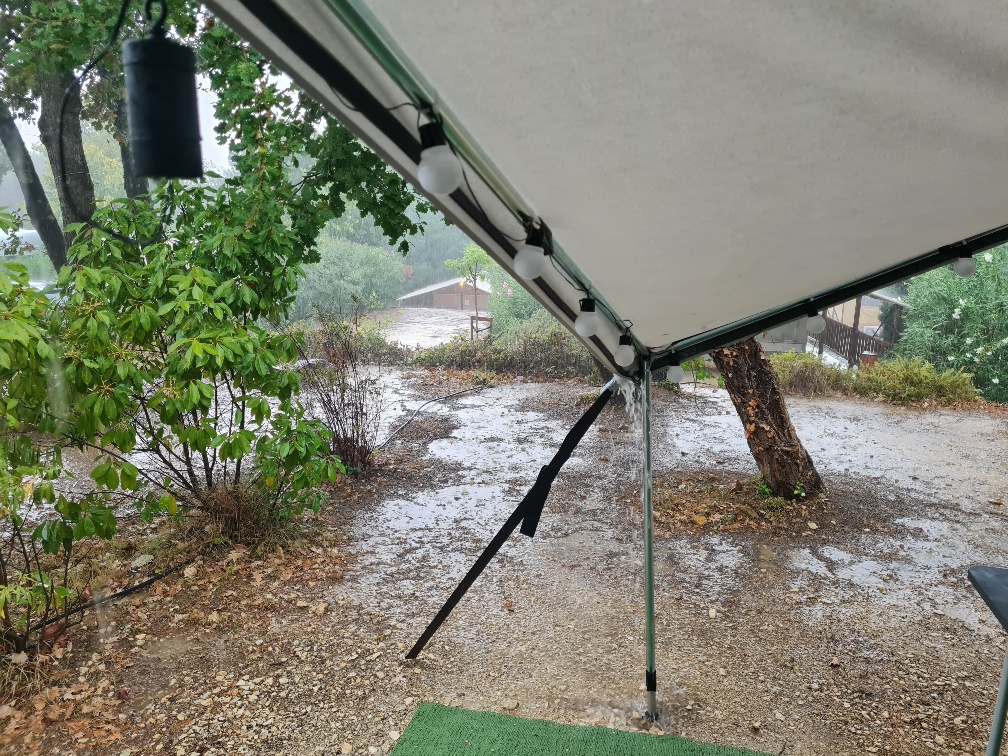
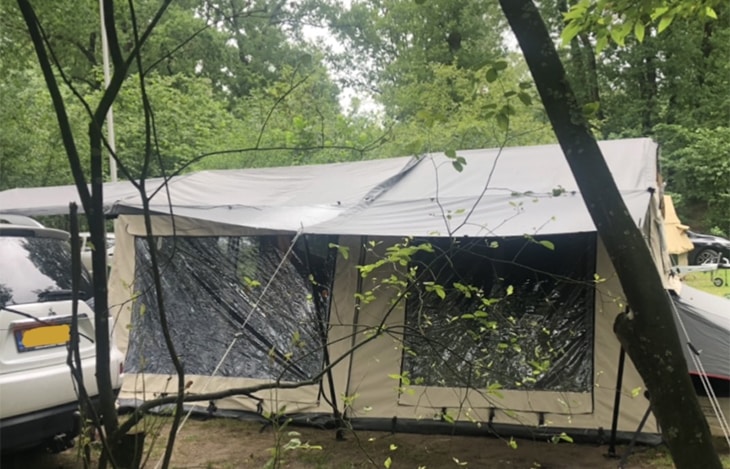
Anyone going camping in autumn should account for the occasional downpour. Is it raining on the exact day you are due to leave? Don't panic. Packing up a wet tent, awning, or canopy is no problem, provided you hang it out to dry again before too long. With these practical tips, you'll pack your camping gear as smartly as possible and prevent mildew and musty odours.
Autumn camping brings stunning fall colours, but also shorter days, frequent rain, and cooler temperatures. As a result, tent fabric dries much slower in the morning than in summer. What’s more, a soaking wet tent in autumn isn’t always caused by a rain shower. Moisture also builds up quickly on the inside of the fabric: condensation. This warm, humid air from your own breath and body comes into contact with the colder tent fabric, creating water droplets.
Rain mainly wets the outside, whereas condensation can also collect on the inside. Knowing the difference is useful, as ventilation helps fight condensation. So keep ventilation openings open as much as possible, even in poor weather, as long as you don’t let rain in.
Do you actually have a wet tent because of rain? Then packing up is all about keeping wet and dry items separate.
If rain is pouring down on your departure day, you want to work quickly and methodically. Follow these four steps:
Are you at the campsite with a motorhome or caravan and autumn weather has soaked your cassette awning? You can safely roll up the awning wet to drive home.
However, moisture has nowhere to go inside a closed cassette. So as soon as you get home, roll the awning out fully again to let the fabric dry. If you leave a wet awning or tent rolled up for days, black mildew spots (‘weathering’) and musty odours will quickly develop. It can also damage the fabric’s water-repellent coating.
Packing wet is fine; storing wet is not. Therefore, unpack wet camping gear as soon as possible after arriving home. Preferably do this within 24 hours, and within 48 hours at the latest.
Hang the tent or awning out in a dry, well-ventilated spot. A garage, attic, or under a patio cover is ideal. Never hang wet tent fabric directly over a hot heater or radiator, and don’t place it in direct sunlight. Rapid, extreme heat can cause the material to shrink or the protective coating to peel off.
| Material | Maximum packed time (wet) | Main moisture risk | Drying tip when returning home |
| Cotton (tent/awning) | Maximum 24 hours | Mildew (‘weathering’), shrinkage, and mustiness | Hang out loosely in a well-ventilated room |
| Polyester / Synthetic | Maximum 48 hours | Coating damage and unpleasant odour | Dries quickly; avoid direct heat sources |
| Cassette awning (PVC/Acrylic) | Maximum 24 to 48 hours | Mildew spots and fabric sticking together | Fully roll out again immediately at home |
| Sleeping bags (Down) | As short as possible | Clumping down and loss of insulation | Dry flat and shake regularly |
| Sleeping bags (Synthetic) | Maximum 24 hours | Unpleasant odours and dampness | Hang loosely on a drying rack |
Spotted an error? Email us. We appreciate it!